
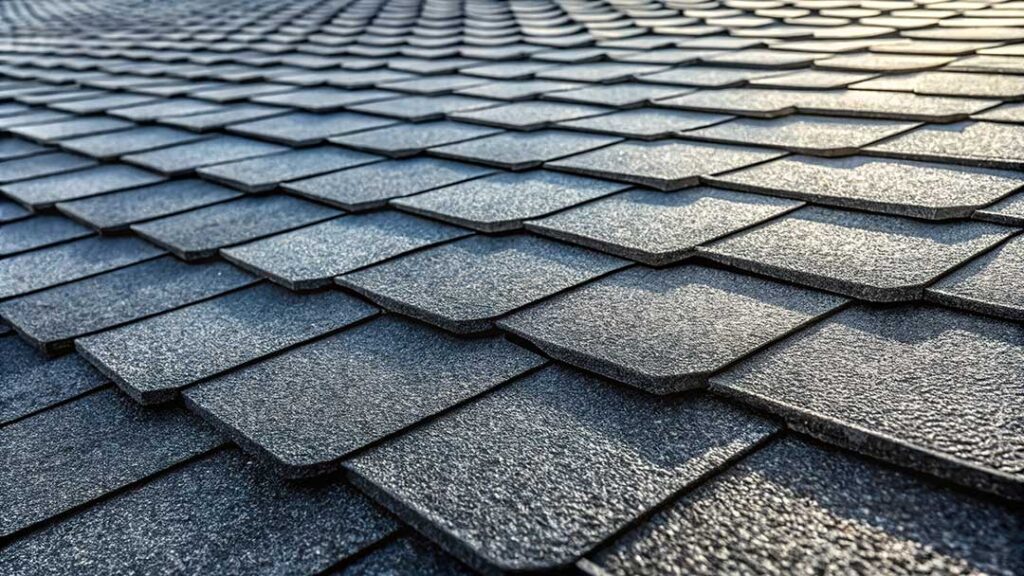
Ice dams form when heat escaping from a house melts snow on the warmer parts of a roof, while colder roof edges refreeze the meltwater. The resulting ridge of ice can block drainage and allow water to move beneath shingles, causing leaks, stained ceilings, wet insulation, and damage to roof edges.
For households in Pine City, NY, ice dams are most likely after repeated snowfalls followed by freezing weather. Preventing them depends less on removing ice after it forms and more on keeping the roof temperature and attic conditions consistent.
What exactly is an ice dam?
An ice dam is a band of solid ice that develops along the lower edge of a sloped roof. It usually begins with uneven roof temperatures.
Snow remains relatively stable on a cold roof. If heat from the living space escapes into the attic, the upper roof surface may become warm enough to melt the snow above it. Meltwater then flows downward toward the eaves, where the roof is colder. There, the water freezes.
As more snow melts, the ice ridge grows. Water can collect behind it instead of draining freely into gutters and away from the house.
Ice dams are not simply caused by “too much snow.” They are usually connected to a combination of:
- Heat loss through the attic ceiling
- Inadequate or blocked attic ventilation
- Uneven insulation coverage
- Heavy snow followed by freezing temperatures
- Warm roof sections near chimneys, attic hatches, plumbing openings, or recessed lights
- Gutters or downspouts obstructed by leaves, ice, or debris
Why are ice dams a concern?
The visible ice is often less damaging than the trapped water behind it. When water backs up under roofing materials, it can reach the roof deck, insulation, wall cavities, and interior ceilings.
Possible signs of trouble include:
- Brown or yellow ceiling stains near exterior walls
- Damp insulation in the attic
- Peeling paint or bubbling drywall
- Drips around windows or along upper-floor walls
- Wet framing or a musty odor in the attic
- Icicles paired with large, uneven bands of ice
Large icicles do not always mean an ice dam is present, but widespread icicles along the eaves can indicate that snow is melting and refreezing repeatedly. A small icicle by itself is not a reliable diagnosis.
How does attic insulation help prevent ice dams?
Proper insulation limits the amount of indoor heat reaching the underside of the roof. A well-insulated attic should remain close to the outdoor temperature, rather than becoming warm enough to melt snow from below.
Insulation must be continuous. Thin areas, compressed sections, gaps around attic hatches, and spaces near exterior walls can create warm patches on the roof. These uneven temperatures are a common reason ice dams form in only certain sections of a roof.
Attic hatches should fit tightly and be weather-sealed. Recessed lights, wiring openings, plumbing penetrations, and ductwork may also allow warm air to enter the attic if they are not properly sealed with materials suitable for the location.
Insulation should not block the channels that allow air to move from soffit vents into the attic. Blocking those pathways can reduce ventilation and cause moisture or heat to accumulate.
What role does attic ventilation play?
Ventilation helps move cold outdoor air through the attic and allows warm, moist air to escape. The goal is balanced airflow, usually with intake openings near the eaves and exhaust openings near the roof ridge or upper roof area.
Ventilation cannot compensate for major air leaks or missing insulation. A well-ventilated attic may still develop warm roof areas if heated indoor air is escaping through the ceiling. Insulation and air sealing address heat loss; ventilation helps manage the remaining attic environment.
Vent openings can also become obstructed by insulation, wind-driven snow, or construction changes. A ventilation system should be evaluated as a complete path rather than by counting one vent type alone.
What can homeowners do before winter?
The most effective prevention work is usually completed before snow arrives.
Check the attic for:
- Gaps around the attic hatch
- Exposed or uneven insulation
- Daylight or visible openings around wiring and plumbing
- Damp insulation or water stains
- Blocked soffit or roof vents
- Areas where the underside of the roof appears darker, damp, or frosted
From outside, inspect whether gutters and downspouts are clear before winter. Leaves and debris can interfere with drainage, although clean gutters alone will not prevent an ice dam caused by roof heat loss.
Pruning nearby branches may also reduce the amount of debris entering gutters and lower the risk of falling limbs during heavy snow or ice. Any work involving steep roofs, ladders on icy surfaces, or electrical fixtures requires caution.
Should snow be removed from the roof?
Removing excessive snow can reduce the amount of meltwater available to form an ice dam, but roof snow removal can be hazardous and may damage shingles if done improperly.
A roof rake designed for ground-level use may be appropriate for some low or moderately sloped roofs, provided it can be used without standing beneath falling snow or pulling dangerously on the roof surface. Metal tools, sharp edges, and aggressive scraping can harm roofing materials.
Snow removal becomes more complicated on steep, tall, heavily loaded, or difficult-to-access roofs. People should not climb onto an icy roof during winter conditions. The weight of snow, the risk of sliding, and hidden ice near the eaves create serious fall hazards.
Do heated cables solve the problem?
Roof de-icing cables can create drainage channels along the eaves, but they do not correct the underlying cause of an ice dam. They may be useful in limited situations, especially where recurring trouble cannot be fully addressed before winter, but they must be installed according to electrical and roofing safety requirements.
Improperly installed cables can damage roofing materials, create electrical hazards, or leave large sections of the roof vulnerable. They should not be treated as a substitute for insulation, air sealing, or balanced ventilation.
Likewise, placing salt, ice melt, or corrosive chemicals on a roof can damage metal components, vegetation, siding, and roofing materials. Chopping at an ice dam with a hammer or similar tool can cause more damage than the ice itself.
What should be done if water is already leaking?
If water is entering the house, place containers beneath active drips and move furniture or valuables away from the area. Avoid standing under sagging drywall, because water-soaked ceiling materials can become heavy and unstable.
If safe to do so, document the location of the leak and inspect the attic from a stable surface. Do not climb onto the roof or walk across wet insulation. Electrical fixtures near water should be treated as a potential shock hazard; power to the affected area may need to be turned off if that can be done safely.
A persistent leak, visible structural damage, extensive ice buildup, or wet electrical components requires qualified assistance. The immediate goal is to control water entry and protect occupants, followed by correcting the heat-loss or ventilation problem that allowed the ice dam to form.
Are ice dams covered by insurance?
Insurance coverage depends on the policy, the cause of damage, and whether the issue is considered sudden, accidental, gradual, or related to deferred maintenance. Some policies may cover resulting interior water damage while excluding the cost of correcting long-term roof or attic conditions.
Photographs, notes about when the leak began, and records of visible damage can be useful when reviewing a claim. Policy language varies, so the insurance contract is the controlling source.
Preventing ice dams is generally a building-performance issue: keep the attic cold, reduce heat leakage, maintain clear airflow, and manage snow safely. In a cold-weather community, those measures are more dependable than trying to break apart ice after it has already blocked the roof’s drainage path.
